
Ivy casino Plinko
Introduction
Plinko looks almost disarmingly simple at first glance. You choose a stake, set a risk level, drop a ball from the top of the board and watch it bounce through a field of pegs until it lands in a prize slot. That is the entire premise. Yet on real-money platforms, including the Ivy casino Plinko page, this format has become far more than a visual novelty. It attracts attention because it compresses suspense into a few seconds and makes randomness feel visible.
As someone who has spent years reviewing online casino products, I find Plinko interesting for one specific reason: it strips away the decorative layer that often surrounds digital gambling. There are no reels, no symbols, no elaborate bonus narrative. What remains is pure outcome anticipation. The ball falls, changes direction repeatedly, and every tiny deflection seems meaningful even though the result is still governed by a random system. That mix of transparency and tension is exactly why Plinko has become such a noticeable casino game.
For UK players browsing Ivy casino Plinko, the key question is not whether the interface looks easy to understand. It does. The real question is what this simplicity means in practice. How fast does the session move? How much does the chosen risk level affect the experience? Can the game feel controlled when the underlying logic is still probabilistic? Those are the points that actually matter before playing for real money, and that is where Plinko deserves a closer look.
What Plinko is and why it draws so much attention
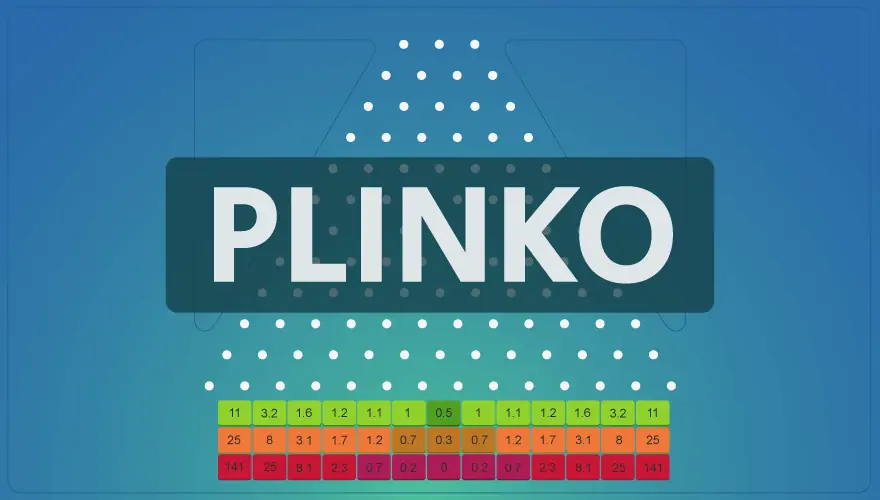
Plinko is a probability-based casino game built around a vertical board filled with pegs. A ball is released from the top and deflects left or right as it strikes each peg on the way down. At the bottom of the board there are multiple outcome slots, each linked to a multiplier. Lower multipliers usually sit around the centre, while the highest ones tend to appear at the edges, where landing is less frequent.
The appeal is immediate because the concept is readable in seconds. Even a first-time player can understand what is happening without learning paylines, symbol values or layered side features. That low entry barrier matters. Many online gambling products ask the player to interpret a lot of information before the first wager feels meaningful. Plinko does the opposite. It puts the outcome path on screen and lets the anticipation build in a very direct way.
Another reason the format has become so visible is that it works well in short sessions. You can play one drop or fifty without needing to “build into” the experience. A slot often asks for patience because value can be tied to bonus rounds, Ivy Casino free spins overview for players or long dry spells between stronger hits. Plinko is more compressed. Each drop is its own event. That gives the game a fast feedback loop, and fast feedback is one of the strongest attention drivers in online casino play.
One detail that often gets overlooked is this: Plinko feels more explainable than many other games, but that does not make it more predictable. In fact, the visible path can create a stronger illusion of near-control. Players see every bounce and instinctively look for patterns. The board encourages that behaviour, even though the outcome remains random within the game’s configured logic.
How the Plinko mechanic actually works on the Ivy casino Plinko page
At a practical level, the mechanic is built around a few adjustable variables. On most Plinko versions available through online casino platforms, the player can set the wager, choose the number of rows and select a risk profile such as low, medium or high. These settings directly shape the distribution of results and the feel of the session.
The ball starts at the top of the board and moves down through successive peg collisions. Every contact changes its route. The visual impression is chaotic, but mathematically the board is structured around a distribution curve. In simple terms, central landing zones are more likely than extreme edge zones. That is why the biggest multipliers are usually placed at the far sides: they are harder to hit.
The number of rows matters because it increases the number of directional decisions the ball makes on the way down. More rows generally mean a wider spread of possible landing positions and a more pronounced difference between common outcomes and rare outcomes. Fewer rows compress the board and tend to make the result spectrum feel tighter.
The risk setting is where the game changes character most sharply. This is not a cosmetic option. It alters the multiplier map and, with it, the practical rhythm of returns. On low risk, the board usually offers more modest multipliers and a denser cluster of smaller outcomes. On high risk, the centre may pay very little while the edges carry much larger values. That can produce long stretches of low returns interrupted by occasional spikes.
| Setting | What it changes | What it means in practice |
|---|---|---|
| Stake size | The monetary value of each drop | Directly affects bankroll pressure during fast sessions |
| Number of rows | The length and spread of the ball’s path | Influences how broad the outcome range feels |
| Risk level | The multiplier distribution across the board | Changes whether the session feels steady, swingy or highly uneven |
| Auto-play or rapid drops | The speed of repeated wagers | Can accelerate losses or outcomes faster than expected |
If I had to summarise the mechanic in one sentence, it would be this: Plinko is less about “hitting a feature” and more about choosing what kind of distribution you are willing to sit through.
Why the game feels engaging and how the session tempo develops
The tempo of Plinko is one of its defining strengths. A single round resolves quickly, usually in a matter of seconds, but not instantly. That small delay is important. It gives the player enough time to track the ball and project possible outcomes, which keeps attention high from drop to landing.
Unlike many slot sessions, where the emotional peaks are concentrated around bonus triggers, Plinko creates micro-suspense on every round. Even a low-stakes drop can feel eventful because the path remains visible until the last moment. The ball can drift toward a high multiplier, clip a peg and swing back toward the middle. That tiny swing is enough to create tension repeatedly.
On the Ivy casino Plinko page, this matters because the game can look casual while behaving like a high-speed wagering format. The interface is clean, the action is readable, and that combination often lowers the player’s sense of intensity. In reality, repeated quick drops can consume a balance much faster than a newcomer expects. A simple screen does not necessarily mean a slow or forgiving session.
One of the most memorable things about Plinko is that it makes silence feel loud. In a slot, sound and animation often tell you when something important has happened. In Plinko, the important moment is often just a ball drifting one peg farther than expected. That is a very different kind of engagement, and for some players it is more absorbing than a heavily themed reel game.
Risk profile, variance and who should treat Plinko carefully
Plinko can range from relatively gentle to aggressively uneven depending on how it is configured. That is why broad statements about the game can be misleading. Saying “Plinko is risky” is incomplete. A low-risk board with a moderate number of rows behaves very differently from a high-risk board designed around rare top multipliers.
From a player’s perspective, the most important concept is variance. In practical terms, variance describes how spread out the outcomes are likely to feel over time. A lower-variance setup tends to produce more frequent but smaller returns. A higher-variance setup can produce long low-return stretches while keeping the possibility of a large multiplier alive. Mobile players should have a look at Ivy Casino poker and account details before installing anything.
That difference affects not just bankroll movement but also psychology. Some players enjoy a session that stays active and relatively stable. Others are specifically chasing the emotional charge of rare bigger hits. Plinko can cater to both, but only if the player understands what the selected settings imply. Choosing high risk because the top multiplier looks attractive, without accepting the likely dry periods, is where frustration usually starts.
There is also a practical bankroll point here. Because rounds resolve quickly, variance is felt faster. In a slow table game, a losing run unfolds over time. In Plinko, twenty or thirty outcomes can pass in what feels like a very short window. That compresses both excitement and damage.
Low risk suits players who want to understand the board and keep results more compact, even if upside is limited.
Medium risk often provides the most balanced introduction, with enough movement in outcomes to stay interesting without becoming too jagged.
High risk is best approached as a specialist setting, not a default one. It can be entertaining, but it asks for patience and discipline.
What players need to understand about probabilities and possible outcomes
Plinko gives a stronger sense of visible probability than many casino games, but that can be deceptive if interpreted too casually. Yes, the board shows where the larger multipliers are. Yes, the ball’s route can be watched in real time. But neither point changes the basic reality: each drop is an independent random event governed by the game’s programmed model.
The central slots are usually more likely because there are more path combinations leading toward the middle than toward the outer edges. This is why the board often resembles a bell-shaped probability structure. The further you move from the centre, the less often those outcomes appear. That is also why edge multipliers can look dramatic compared with the modest values in the middle.
For the player, this means three things:
A high displayed multiplier is not “due” just because it has not appeared recently.
A sequence of central landings does not indicate that the board is cold or broken; it often reflects the underlying distribution.
Changing risk level changes the payout landscape, but it does not remove randomness or create a reliable pattern.
If a demo mode is available, it is useful not because it reveals a secret strategy, but because it helps the player feel the pace and understand how different settings alter the session. That is a practical benefit. It teaches expectation management, and expectation management is more valuable in Plinko than many beginners realise.
How Plinko differs from slots and other online casino formats
The easiest comparison is with online slots, because that is where many players arrive from. A slot is usually built around layered design: symbol weighting, line or ways logic, bonus rounds, free spins, multipliers and theme-driven presentation. Plinko removes almost all of that. It is closer to a distilled probability event than to a traditional reel experience.
This changes the player relationship with the game. In slots, part of the engagement comes from waiting for a feature to trigger. In Plinko, there is no equivalent build-up mechanic in the classic sense. The attraction is immediate and repetitive. Every drop is the moment. That makes the format cleaner, but also less varied for players who enjoy progression, unlock sequences or extended bonus play.
Compared with Ivy Casino roulette and casino rules, Plinko shares the appeal of quick outcomes and visible chance, but the emotional texture is different. Roulette resolves in a single reveal. Plinko unfolds through movement. Compared with crash-style products, Plinko is less about deciding when to cash out and more about accepting a pre-defined result path. Compared with blackjack or poker-based formats, there is no strategic layer once the drop begins.
| Format | Main source of engagement | What Plinko does differently |
|---|---|---|
| Classic slots | Features, symbols, bonus rounds | Focuses on short, self-contained outcome cycles |
| Roulette | Single-point reveal and bet variety | Adds a visible path that stretches suspense over a few seconds |
| Crash games | Timing the cash-out decision | Removes player timing and centres everything on distribution |
| Blackjack | Decision-making and house edge management | Offers almost no tactical intervention once the round starts |
This is exactly why Plinko divides opinion. Some players love the stripped-back format because it feels honest and immediate. Others find it too narrow because it lacks evolving structure.
Where Plinko performs well and where its limits become obvious
Its strongest quality is clarity. The player can understand the format quickly, see the result unfold and adjust settings without learning a complex rule set. That makes Plinko accessible in a way many casino games are not. It is also highly flexible. A player can use it for a few quick drops, a measured low-risk session or a more aggressive high-variance chase.
Another strength is that the risk setting has real meaning. In some online casino products, configuration options feel superficial. In Plinko, they meaningfully alter the session profile. That gives the player more control over the style of play, even if not over the result itself.
Still, the limitations are equally real. The format can become repetitive if a player needs stronger thematic immersion or feature diversity. There is also a common misunderstanding that visual transparency equals strategic depth. It does not. Once the ball is dropped, there is nothing to manage. If a player wants decision-heavy gambling, Plinko will feel thin.
I would also flag one subtle weakness: because the board is so easy to read, players may overestimate their intuitive grasp of it. Plinko can feel “understood” long before it is emotionally understood. By that I mean a player may know the rules in thirty seconds but still underestimate how a high-risk setup behaves over fifty rounds.
What to check before starting a real-money Plinko session
Before launching Ivy casino Plinko for real stakes, I would focus on a few practical checks rather than broad excitement. This is not the kind of game where complexity hides in the rules. It hides in the pacing and the distribution of outcomes.
Check the risk level first. Do not treat this as a minor toggle. It is the main driver of session character.
Look at the multiplier map. See where the meaningful values sit and how exposed the board is to low-return central results.
Set a fixed stake with session length in mind. Because rounds are rapid, even small bets can add up quickly.
Be careful with auto-play. Automation can turn a readable game into a blur, and that undermines the one advantage Plinko has: visible pacing.
Use demo mode if available. Not to beat the game, but to understand whether the rhythm suits you.
The most practical question is simple: do you want a game that delivers immediate, repeated suspense without much strategic input? If the answer is yes, Plinko may fit well. If you want a format where choices shape the result more directly, another category will likely serve you better.
Final verdict on Ivy casino Plinko
Ivy casino Plinko offers a very specific kind of casino experience. It is not trying to replace feature-rich slots, blackjack checklist or strategy-led formats. What it offers instead is concentrated randomness presented in a way the player can watch unfold. That is the core of its appeal. The board is easy to read, the rounds are short, and the tension arrives almost instantly.
Its strongest points are clarity, speed and the meaningful effect of adjustable risk levels. Those elements make the game accessible while still allowing very different session styles. A cautious player can keep things relatively controlled. A more aggressive player can push toward wider swings and rarer top-end outcomes. The same interface can therefore produce very different experiences.
The caution point is equally clear. Plinko’s simplicity should not be mistaken for softness. Fast rounds and high-risk settings can create sharp bankroll movement, and the visible path of the ball can encourage false pattern-reading. That is where discipline matters most.
For players who enjoy short-form suspense, direct presentation and a clean probability-driven format, Plinko is easy to justify trying. For players who need deeper strategy, richer progression or more varied gameplay layers, it may feel limited after the novelty settles. In other words, Plinko is at its best when approached for what it really is: a minimalist but psychologically effective casino game built around tempo, distribution and the tension of watching chance take shape in real time.
FAQ
How does Plinko work when a ball is dropped?
A ball is launched from the top and bounces across the peg grid before landing in a payout zone. Each zone shows a multiplier that applies to the selected bet. The result is calculated from where the ball lands.
What risk level should players expect from Plinko multipliers?
Plinko multipliers vary by landing zone, so outcomes can swing quickly. Higher multipliers typically come with a lower chance of landing there. Volatility is usually reflected in how uneven the distribution is across the board.
Which is faster to play on the same device: demo mode or real-money play?
Demo mode usually launches immediately, since it does not require a real-money account balance check. Real-money play requires active account access and availability of the bet option.
What is the difference between playing Plinko in demo mode and real-money play?
Demo mode uses game credits for practice and does not involve withdrawals. Real-money play uses an account balance, so deposit and withdrawal rules apply. The game mechanics stay the same, but bonus eligibility, session handling, and account restrictions can differ.
On mobile, how should Plinko be launched from an app or the official site?
Open the mobile casino app and enter the game lobby, then select Plinko from the game list. If using a browser, sign in from the official site and open the Plinko game page directly. Switching networks or rotating the device may help if animations do not render properly.
Where can players check their current mirror or working access if Plinko is unavailable?
If the main game route is blocked, the site typically offers working access options from the mirror or footer links. Using an alternative access route keeps the login session intact in most cases. After switching, re-open the Plinko game lobby to confirm the table has loaded.
For returning players, why might the Plinko bet options look different after an update?
A new session can reset default bet settings and reload table limits. Browser updates can also change how controls display. Signing in again and reopening Plinko from the game lobby usually restores the current in-session layout.
How should Plinko be approached for responsible play and session limits?
Set a clear budget before starting and stick to a defined session limit. Use demo mode for testing bet sizes and comfort with multiplier swings. If the session feels too fast or stressful, stopping early helps keep control of play.
What is the quickest way to start a Plinko round on Ivy once logged in?
Open Plinko from the game lobby, set the bet using the on-screen controls, and press Drop. Watch the ball’s path and the landing zone multiplier, then adjust the next bet if needed before starting another round.